Primer Server
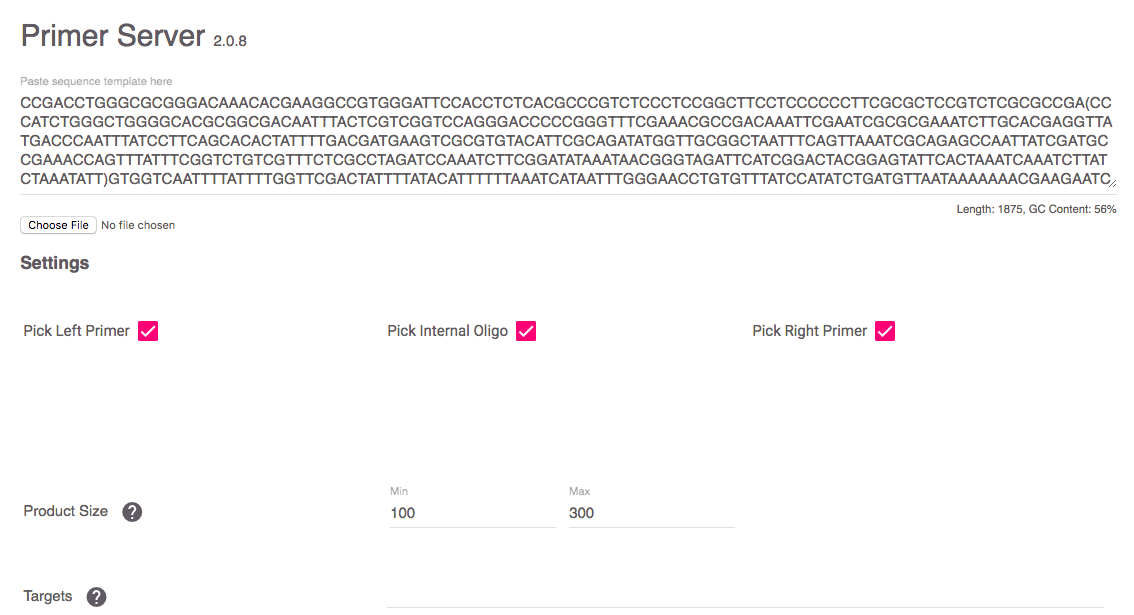
Primer Server is a web application for designing PCR primers. It puts sequence input, design settings, and a visual display of results in one browser interface.
How it works
PCR, or polymerase chain reaction, makes many copies of a chosen DNA region. A pair of short DNA primers binds to opposite strands on either side of that region, giving the copying enzyme its starting points. When the starting material is RNA, it must first be converted to DNA by reverse transcription.
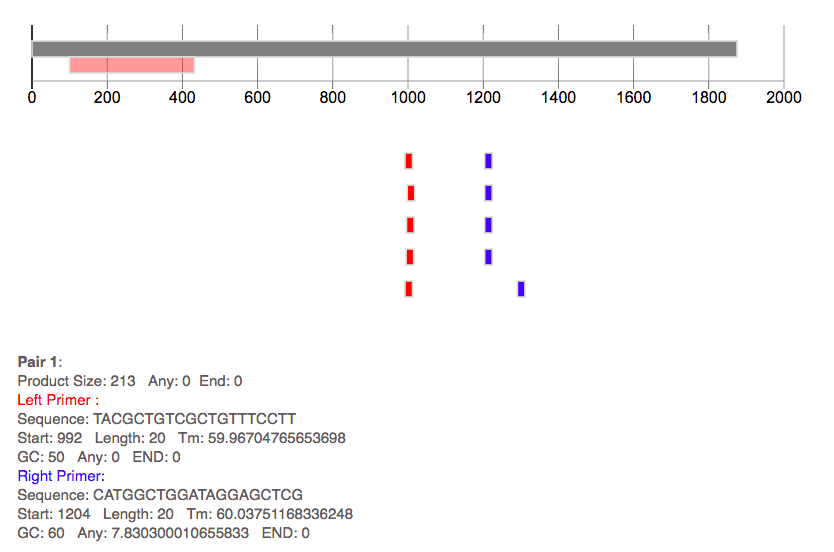
The user supplies a target sequence, including through a FASTA file, and chooses design settings. An Angular interface checks the input and sends a request to a Python/Flask server. The server passes the task to the primerDAFT design engine and returns the results through an HTTP API. The interface plots primer positions along the sequence so the proposed pairs are easier to inspect.
Good primer design also needs specificity checks. A primer that matches another region can lead to an unwanted product. Sequence-search tools such as BLAST help identify possible off-target matches, but computational checks do not replace laboratory validation.
The goal was to make an existing scientific workflow easier to use, not to claim that primer design or specificity checking was new.
Project history and poster
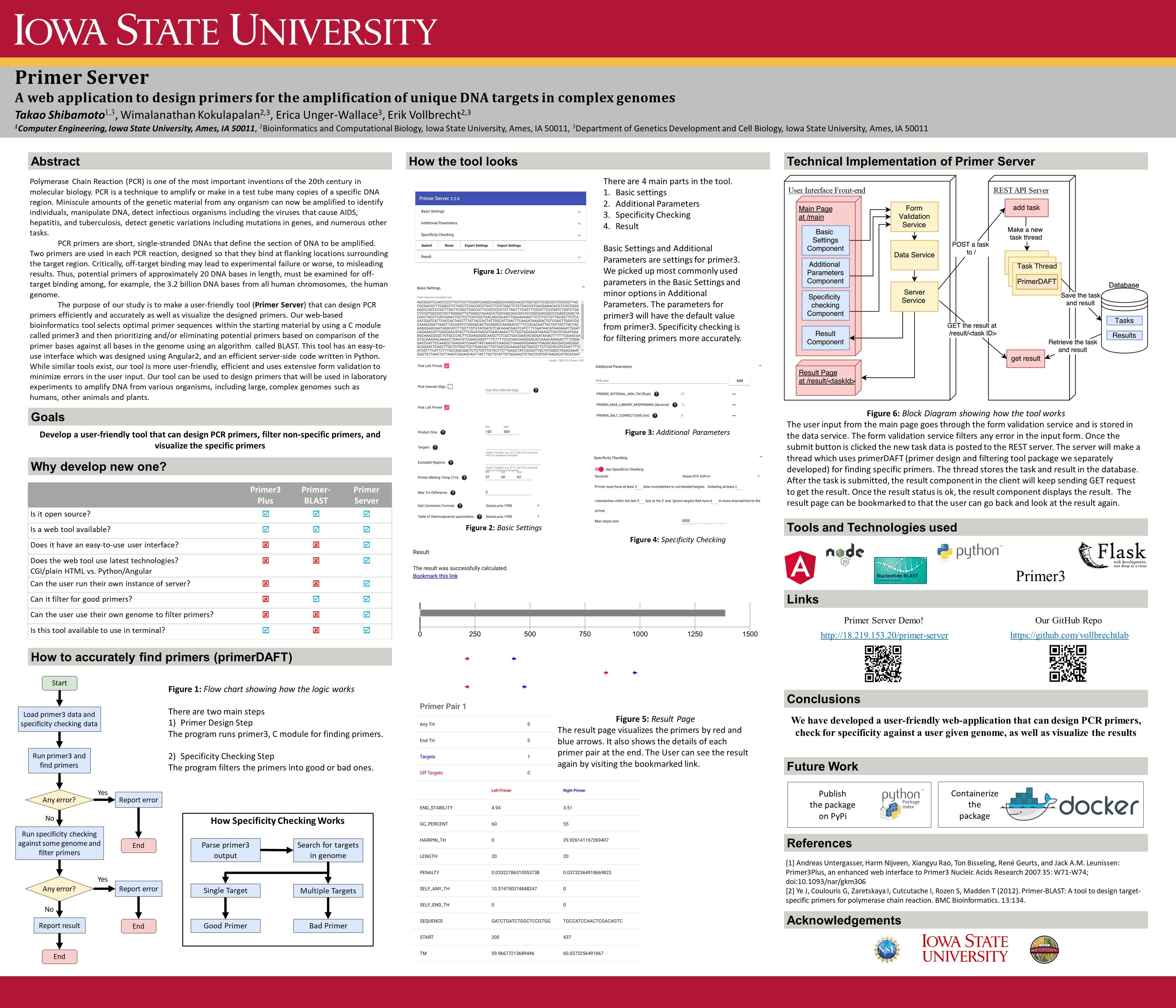
The project began with a beta version in 2017, when specificity checking was still in development. The poster below was presented at the 2018 National Conference on Undergraduate Research (NCUR) at the University of Central Oklahoma. Select the image to open the PDF.
2019 update: In February 2019, Primer Server became available as a hosted web application at Iowa State University. The release brought the workflow developed at Vollbrecht Lab to researchers without requiring a local installation. This is a historical project record, not a guarantee that the original service remains available or maintained.