Genomic selection simulator
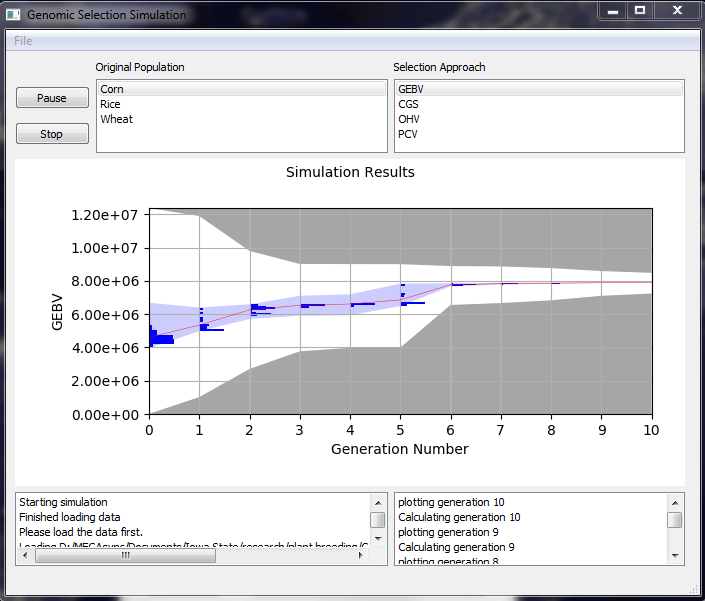
Genomic selection uses DNA marker data to estimate a plant’s breeding value, a score for the traits it may pass to its offspring. This simulator explores how those scores change over repeated generations of selection and crossing.
The simulator starts with a population’s genome data, estimated effects of DNA markers, and recombination rates. Recombination describes how genetic material is mixed when parents produce offspring.
In each generation, it selects the top 10% of plants by estimated breeding value, pairs them, and simulates 20 offspring per pair. Each offspring’s score is the sum of its marker effects. The process runs for 10 generations, while a chart shows the score distribution and average for each generation.
The calculation engine uses NumPy arrays, with a Python/Qt interface for loading data and viewing results. It builds on a MATLAB research implementation.
This is a way to explore a breeding model, not a guarantee of finding the best possible plant. Results depend on the input data, estimated marker effects, and random inheritance.